
How Sober Living Supports Dual Diagnosis Recovery
When you're dealing with both addiction and a mental health condition, standard recovery advice often falls short. Here's why sober living plays a different — and more important — role for people with a dual diagnosis, and what to look for in Kentucky.

Sober living supports dual diagnosis recovery by providing daily structure, peer accountability, and a substance-free environment while a person continues outpatient treatment for both addiction and mental health. Stability in housing is one of the strongest predictors of long-term recovery outcomes.
Table of Contents
Most people in recovery get some version of the same advice: go to treatment, go to meetings, stay away from old habits. That advice isn’t wrong. But for people dealing with both addiction and a mental health condition at the same time, it often isn’t enough.
When mental health and addiction are both in the picture, each one can trigger the other. A depressive episode can lead to drinking. Withdrawal can send anxiety through the roof. Without the right environment to support both, clinical progress made in treatment can unravel faster than most people expect. Sober living, when it’s connected to real treatment, is often the piece that changes that outcome.
What Dual Diagnosis Actually Means in Everyday Life
Dual diagnosis — sometimes called co-occurring disorders — means a person is living with both a substance use disorder and a mental health condition at the same time. It’s more common than most people realize. According to SAMHSA, more than 9 million adults in the U.S. are managing both, and the majority aren’t receiving treatment for both simultaneously.

The most common combinations look like this: depression and alcohol use disorder, anxiety and opioid dependence, PTSD and substance use, bipolar disorder and alcohol or stimulant use. If you’ve ever used substances to take the edge off anxiety, to sleep, to feel something, or to feel less — that pattern has a clinical name, and it’s one of the most treatable forms of addiction when it’s addressed correctly.
The core challenge is that each condition fuels the other. Substances temporarily reduce mental health symptoms, which is why people reach for them. But over time they make those symptoms worse, which increases the urge to use. Without treating both at the same time, neither gets better. That’s what makes the environment someone lives in during recovery so important — and why the [connection between mental health and addiction] runs deeper than most people initially understand.
Why Standard Recovery Environments Often Don’t Work
If you or someone you love has tried treatment before and it didn’t hold, the environment after treatment may be part of why.
Going home after completing inpatient rehab is hard for anyone in early recovery. For someone managing a mental health condition alongside addiction, it can be genuinely destabilizing. Stress triggers relapse. Isolation worsens depression. Disrupted sleep affects mood, which affects judgment, which affects every decision that follows. An unsupportive home environment — or simply a familiar one filled with old associations — can undo weeks of clinical progress in a matter of days.
The advice “just go to therapy” doesn’t account for what happens between sessions. It doesn’t account for who you’re living with, what’s in the house, whether anyone knows if you took your medication today, or what happens when a mental health episode hits at 11 pm on a Tuesday. Clinical treatment is essential. But for dual diagnosis, it needs an environment that supports it — and that’s where most recovery plans leave a gap.
How Sober Living Fills That Gap
A well-run sober living home isn’t a treatment program. But what it provides can make treatment actually work.
- Routine lowers the baseline. Predictable daily structure — consistent wake times, shared responsibilities, regular meals — genuinely reduces anxiety and emotional dysregulation. For someone managing bipolar disorder or depression, this isn’t a minor comfort. Routine is clinical. Chaos is a trigger.
- Accountability keeps people in treatment. Most sober living homes require residents to actively participate in outpatient or IOP programming as a condition of staying. That external expectation matters enormously in early recovery, when motivation is inconsistent and avoidance is the easiest thing in the world. A house manager or peer who notices you haven’t left for your appointment yet provides a kind of daily support that weekly therapy sessions simply can’t.
- A substance-free environment closes the shortest path to relapse. For dual diagnosis, substances are usually the fastest available coping mechanism when mental health symptoms spike. Living somewhere that removes access to substances and the social pressure to use doesn’t address the root cause — but it narrows the window between a bad moment and a bad decision. That window is where a lot of relapses happen.
- Community fights isolation. Isolation is dangerous for both depression and addiction. It’s not a lifestyle preference — it’s a risk factor. Sober living provides daily contact with people who understand the struggle without needing an explanation. That isn’t therapy, but it’s protective in ways that are hard to replicate anywhere else.
What to Look for in a Sober Living Home When You Have a Dual Diagnosis
Not all sober living homes are set up to support people with co-occurring disorders. If you’re evaluating options, these are the things that actually matter.

Is it connected to clinical treatment? A sober living home that operates in isolation from outpatient or IOP programming is a red flag for dual diagnosis. The two need to work together. If the home has no relationship with treatment providers, that gap becomes your problem to manage alone.
Does staff understand mental health, not just addiction? Ask directly whether the home has protocols for mental health crises — not just for substance use relapses. Not every house manager has that training. For dual diagnosis residents, it matters.
What is the medication policy? Some older sober living homes have blanket restrictions on prescription medications — including psychiatric medications like antidepressants, mood stabilizers, and anti-anxiety medications. For someone who needs those to function, this is a dealbreaker. Confirm the home explicitly supports prescribed mental health medication before committing.
How close is it to services? Proximity to outpatient treatment, pharmacies, and psychiatric care isn’t a convenience — it’s a barrier-reducer. Every additional logistical step between a person and their treatment appointment is an opportunity to skip it.
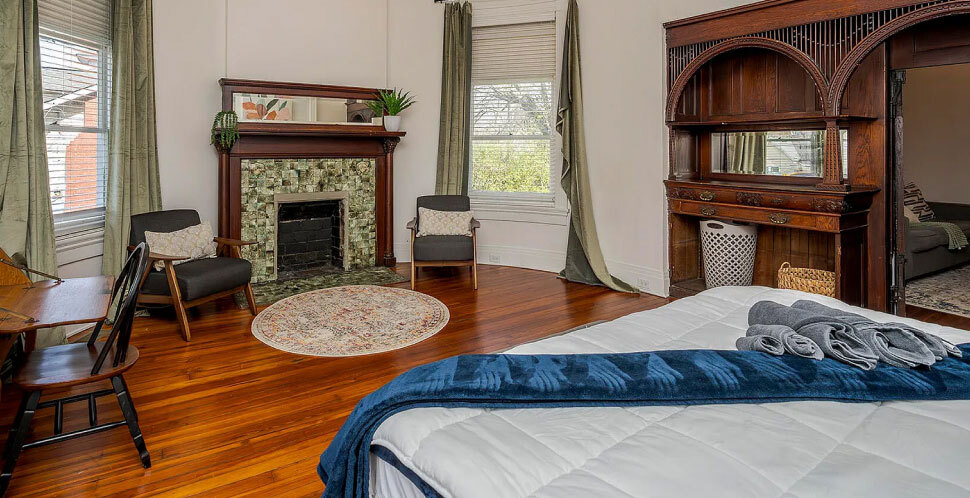
Altruism Counseling’s sober living homes in Lexington — Chloe’s House on W 6th Street and Louden House on E Loudon Ave — are both designed to connect directly with Altruism’s outpatient and IOP programming. Treatment and housing aren’t two separate systems to figure out independently. They’re built to run alongside each other.
Dual Diagnosis Treatment in Lexington, KY
Dual diagnosis treatment means both conditions are addressed at the same time — not one after the other. In an outpatient setting, that typically looks like group therapy, individual counseling, psychiatric support where appropriate, medication-assisted treatment if needed, and case management to help coordinate care.
The distinction matters because treating addiction first, then mental health, rarely works. Mental health symptoms don’t stay neatly on hold while someone works through addiction treatment. And trying to address mental health in isolation while addiction is still active is equally unlikely to succeed. Integrated dual diagnosis treatment — where both are happening simultaneously — is the standard of care for a reason.
For people in Lexington who have tried treatment before without this component, or who went home after treatment to an environment that made stability impossible, combining dual diagnosis care with sober living is often what changes the outcome.
Is Sober Living the Right Next Step?
Sober living is likely the right move if someone has completed inpatient or residential treatment and isn’t safe or ready to return to their previous environment. It’s also the right move if they’re starting IOP or outpatient treatment and need stable housing to make consistent attendance possible — or if previous attempts at recovery have been derailed by the home environment or social circle.
It may not be enough on its own if mental health conditions are currently untreated or in acute crisis, if medically supervised detox is still needed, or if the level of clinical supervision required goes beyond what sober living provides. In those cases, a higher level of care comes first.
If it’s not clear which of those describes the situation, that uncertainty is exactly what a psychosocial assessment is for. It takes the guesswork out of it.
The Right Environment Is Part of the Treatment
Dual diagnosis recovery is harder to sustain without the right environment — and the research is detailed on that. Sober living, when it’s connected to genuine clinical treatment, provides the daily conditions that give recovery a real chance to hold. Structure, accountability, community, and a substance-free environment aren’t extras. For co-occurring disorders, they’re part of the treatment.
If you’re in Lexington or anywhere in Kentucky and trying to figure out what the next step looks like, the team at Altruism Counseling is here to help you work through it.
FAQ – Common Questions & Clear Answers
Can you go to sober living if you have a mental health condition?
Yes — and for many people with co-occurring disorders, sober living is especially valuable. It provides the daily routine, peer accountability, and substance-free environment that supports both mental health stability and sobriety, particularly during the early and most vulnerable stages of recovery.
How does sober living help with depression or anxiety in recovery?
Sober living provides consistent daily routines, peer connection, and an environment free from substances — all of which reduce the key triggers for depression and anxiety. When combined with ongoing outpatient treatment, it creates the conditions that make mental health stabilization more sustainable over time.
